
Students on a study abroad trip in Japan
More Than Fashion: How Illinois Is Building a Different Kind of Design Education
By Amy Karagiannakis
“The interest had been there for a really long time,” Becker said. “For years, I taught the only fashion design elective Illinois offered, and semester after semester, students made it clear in their course feedback that they wanted more ways to continue studying fashion.”
When the Fashion concentration officially launched in 2021, it wasn’t an attempt to imitate the country’s most recognizable fashion schools. Becker believed Illinois had an opportunity to create something different—something rooted in the strengths of a world-class research university.
“Our program is located in the middle of the cornfields of Illinois, rather than in a global fashion capital like New York City,” she said. “We are not going to offer the same kinds of experiences as a design school in a metropolitan area like Parsons or FIT. But the University of Illinois is a leading R1 public research university. How can our program capitalize on that? What can we be that a Parsons or FIT can’t?” That question continues to shape every aspect of the program.
Rather than focusing solely on preparing students for careers in apparel design, the Fashion concentration encourages them to think broadly about creativity, technology, sustainability, entrepreneurship, and collaboration. Students learn the fundamentals of design and garment construction, but they’re also challenged to understand how fashion intersects with business, engineering, psychology, culture, and emerging technologies.
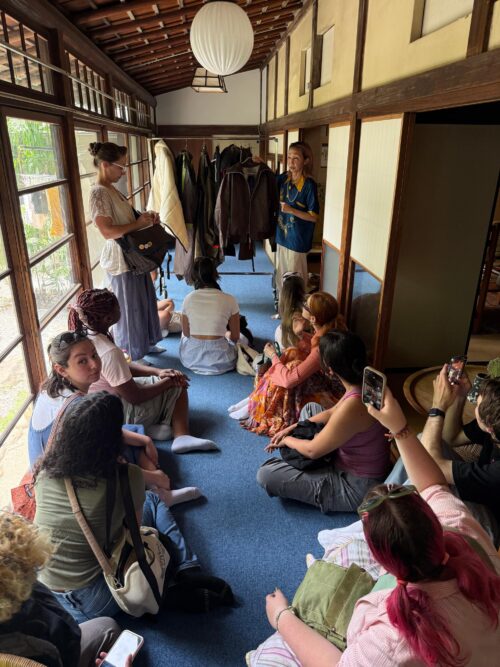
Students on a study abroad trip in Japan
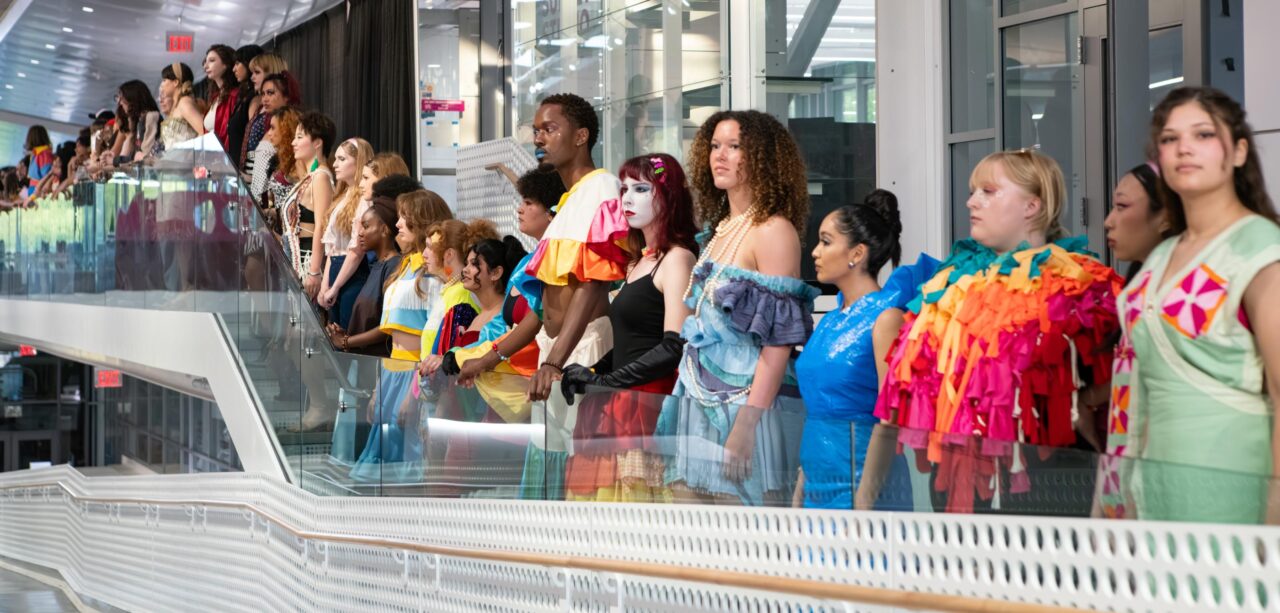
Re-fashioned 2026 models in line for final appearance and applause. Photo by Natalie Fiol.

Students at Tessitura Luigi Bevilacqua in Venice during the study abroad trip in Italy
More Than Fashions Cont.
For Becker, developing strong artists comes first. “I want students to have the experience of grounding themselves in an artistic practice, of really knowing themselves as designers, before they pivot to, ‘Okay … how am I going to answer the needs of the customer?’” That philosophy has become one of the defining characteristics of fashion education at Illinois.
Unlike traditional fashion schools concentrated in major design centers, Illinois offers students access to an ecosystem where disciplines naturally intersect. Becker sees those opportunities as one of the program’s greatest advantages. “For example, we have an incredible business college within spitting distance of the School of Art and Design,” she said. Increasingly, the program is finding ways to take advantage of those distinctive resources.
This semester, Becker is co-teaching “Entrepreneurship in Fashion” with Senior Instructor Jeff Kurtz from the Gies College of Business, bringing together students from Art and Design and Business to explore how creative ideas become successful ventures. Rather than asking students to just design a collection, the course asks them to consider every step of the launch process—from concept and sourcing to branding, manufacturing, marketing, and the customer experience.
“There is already a lot of information available to anyone interested in entrepreneurship. The idea for the course is not to be exhaustive but to give students a solid framework—to help them understand the questions they need to be asking at every step along the way, from the initial concept to reaching the fashion consumer—then give students from different disciplines, art and business, the opportunity to wrestle with forming answers to those questions together,” Becker said.
The course reflects Becker’s own experience. After launching her fashion career, she realized that while her education had prepared her as a designer, it had left gaps in the practical realities of running a business. “It was a shock,” she said. “As amazing as my undergraduate education at Rhode Island School of Design was, I didn’t learn a thing about the business side of fashion.”
The course will culminate in a Shark Tank–style pitch where teams will present their brand concepts to a panel of industry experts for mock funding.
The entrepreneurial focus is only one example of how the program continues to evolve.
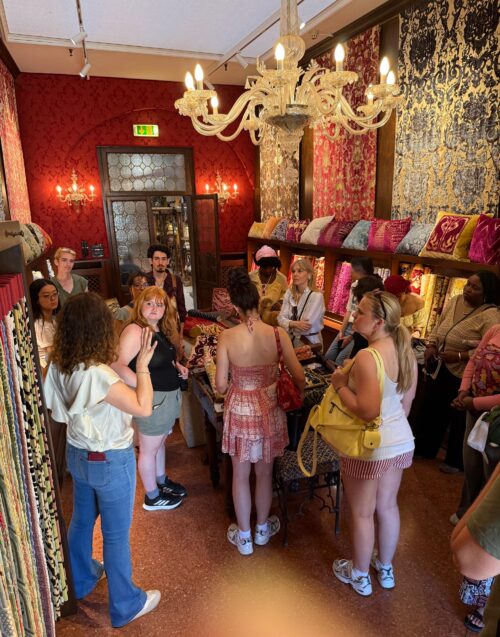
Students at Tessitura Luigi Bevilacqua in Venice during the study abroad trip in Italy

Student designing a garment using Gravity Sketch in virtual reality
CITL
Clinical Associate Professor Chiara Vincenzi has helped introduce students to emerging technologies that are rapidly changing the fashion industry. “Students are increasingly aware of the impact their design decisions have, from material selection to garment design and waste production,” shared Vincenzi.
Through a partnership with the Center for Innovation in Teaching and Learning (CITL), Vincenzi has incorporated digital and immersive tools such as CLO 3D, Virtual Reality Gravity Sketch, and Open Brush into the coursework.
“Integrating technologies such as CLO 3D and virtual reality into the curriculum allows them to explore new ways to create and communicate their ideas,” she said. “CLO 3D, for example, enables students and designers to develop, visualize, and refine garments digitally before any fabric is cut. This saves time and resources and supports more sustainable practices, including waste reduction and zero-waste design strategies. These technologies help students build confidence in their creative skills, making the design process more accessible. Even students that are still developing sewing and technical construction skills can see their ideas come to life in three dimensions, allowing them to experiment, refine concepts, and present their work professionally.”
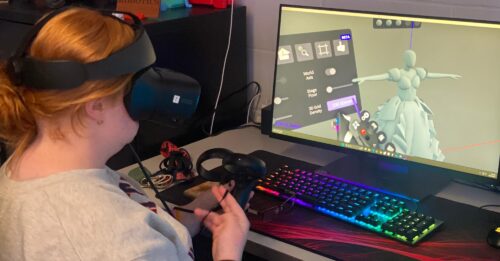
Student designing a garment using Gravity Sketch in virtual reality
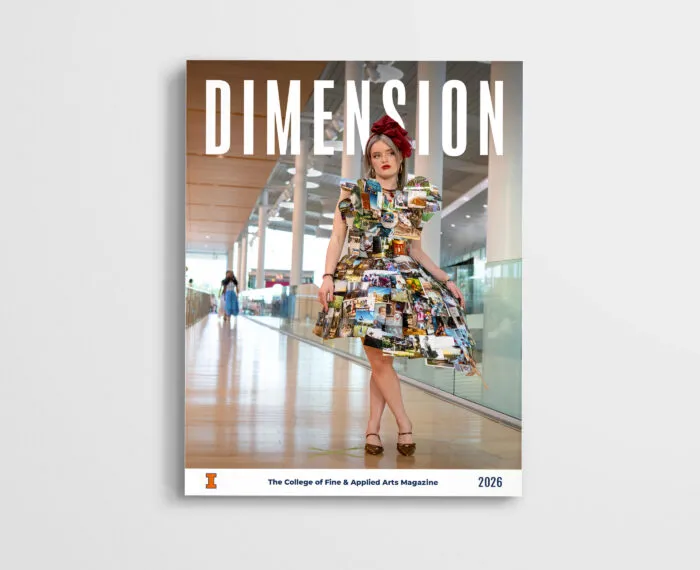
Dimension cover 2026
Stella Youse (BFA ’27 Studio Art) designed and modeled this runway look in Re-fashioned 2026, featured on the digital cover of Dimension 2026.

Weaving workshop at La Tessitura La Colombina in Treviso, during the study abroad trip in Italy
More Than Fashion Cont.
The technology doesn’t replace traditional craftsmanship—it expands it. Students still sketch by hand, sew garments, study textiles, and develop an understanding of construction, while learning the digital tools increasingly expected throughout the global fashion industry. Vincenzi added, “As these digital tools become essential across the fashion industry, we are preparing our students to enter the industry with technical expertise and creative confidence, skills needed to communicate their ideas effectively and help shape a more ethical and sustainable future for fashion.”
Together, Becker and Vincenzi have built a program that encourages students to move comfortably between studio practice, digital technology, research, and entrepreneurship.
Fashion student Kiera Oliva-VanDeWalle is grateful for the unique experience she has gained at Illinois. “We worked on a post-mastectomy compression bra, Chiara and I, along with medical and engineering students, which was really cool,” Oliva-VanDeWalle shared. “I don’t think I would have gotten to do that if I went somewhere else.”
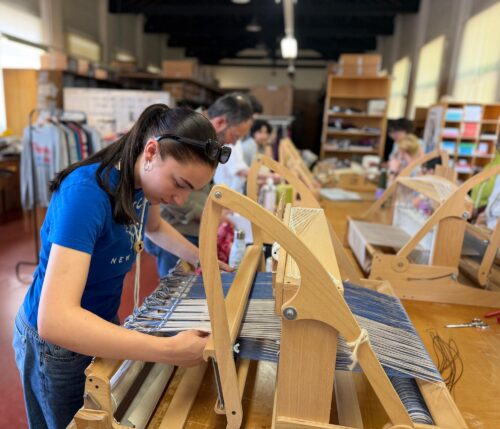
Weaving workshop at La Tessitura La Colombina in Treviso, during the study abroad trip in Italy

Students meeting fiber artist Patrizia Polese, during the study abroad trip in Italy
More Than Fashion
That interdisciplinary mindset also extends beyond campus.
In recent years, the program has expanded its global learning opportunities. Last year, Becker led a study abroad program with Associate Dean Nicole Turner and Teaching Assistant Professor Lindsey Stirek to Japan, and earlier this year, she joined a study abroad program in Italy conceived and led by Vincenzi. There, students were immersed in Italy’s rich traditions of craftsmanship, innovation, and fashion while engaging directly with designers, manufacturers, and entrepreneurs.
“Through the design of this program abroad, my hope was to immerse students in Italy’s culture of slow fashion design and production, where quality, sustainability, and heritage are valued and move hand in hand with innovation,” Vincenzi shared. “By engaging directly through visits and workshops with artisans and creative professionals, students gained a deeper appreciation for generations of knowledge and expertise that continue to inspire and shape the fashion industry today.”
Students visited companies experimenting with sustainable materials, explored family-owned businesses where generations of craftsmanship continue to shape production, and gained insight into the cultural values that influence Italian design.
For many students, the experience reshaped not only how they thought about fashion, but how they imagined their own futures. “I hope students returned from this experience with a broader global perspective, a greater appreciation for responsible design practices, and an understanding of how tradition and innovation can work together to shape the future of fashion,” Vincenzi said.
Those lessons come together each spring in the School of Art and Design’s annual Re-Fashioned Show, where students transform donated clothing, discarded textiles, and unconventional materials into original wearable works of art. More than a runway show, the event challenges students to think critically about sustainability, craftsmanship, and the lifecycle of the garments they create. It also gives them experience presenting their work to a public audience—a fitting culmination of the creativity, technical skill, and experimentation they’ve developed throughout the program.
For Becker, the show reflects the values at the heart of the Fashion concentration. “Sustainability has always been the bedrock of the program. The fashion industry has to change, and that change has to come from across the system—from consumers being more educated about what and how much they buy, to designers and manufacturers making conscious choices about materials, labor practices, production, waste, and what happens to a garment at the end of its life.”
Students aren’t simply designing garments; they’re learning to ask thoughtful questions about materials, consumption, innovation, and the role fashion can play in addressing contemporary challenges.
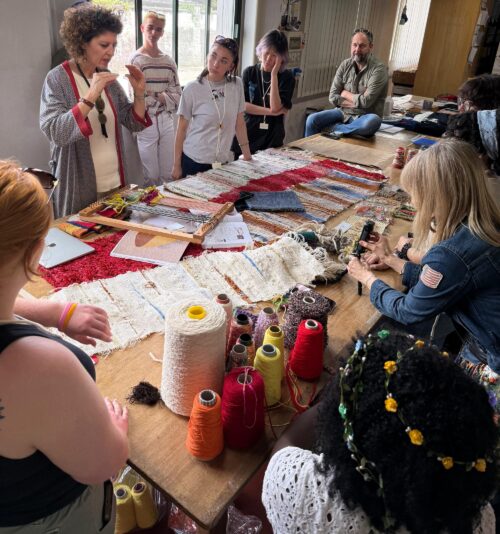
Students meeting fiber artist Patrizia Polese, during the study abroad trip in Italy

Re-Fashioned 2025. Photo by William Hohe.
Re-Fashioned 2025. Photo by William Hohe.

Woven Emotions: Healing designed by Elle Rife. Model: Raine. Re-Fashioned 2026. Photo by Natalie Fiol.
Woven Emotions: Healing designed by Elle Rife. Model: Raine. Re-Fashioned 2026. Photo by Natalie Fiol.


Future Fiction: Medieval Punk Party designed by Elle Rife. Models: Aja Hunter and Xyla Featherson. Re-Fashioned 2026. Photo by Natalie Fiol.
Future Fiction: Medieval Punk Party designed by Elle Rife. Models: Aja Hunter and Xyla Featherson. Re-Fashioned 2026. Photo by Natalie Fiol.

Gender/Silhouette designed by Leo Zhang. Re-Fashioned 2026. Photo by Natalie Fiol.
Gender/Silhouette designed by Leo Zhang. Re-Fashioned 2026. Photo by Natalie Fiol.

Future Fiction: Dystopia, climate collapse, chic survivalist designed by Stella Youse. Models: Nate Campion and Ariana Le Faivre. Re-Fashioned 2026. Photo by Natalie Fiol.
Future Fiction: Dystopia, climate collapse, chic survivalist designed by Stella Youse. Models: Nate Campion and Ariana Le Faivre. Re-Fashioned 2026. Photo by Natalie Fiol.
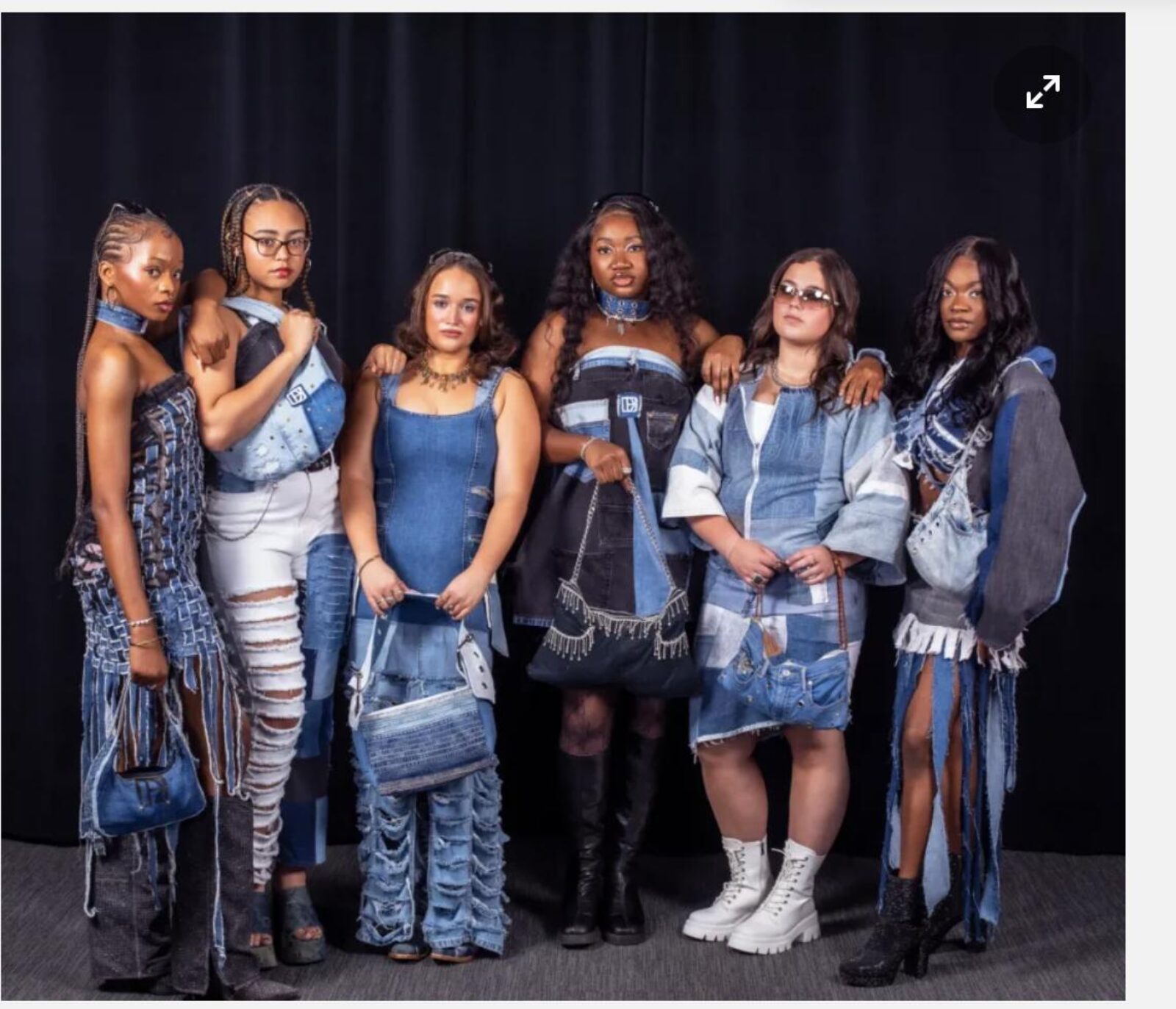
Re-Fashioned 2025. Photo by William Hohe.
Re-Fashioned 2025. Photo by William Hohe.
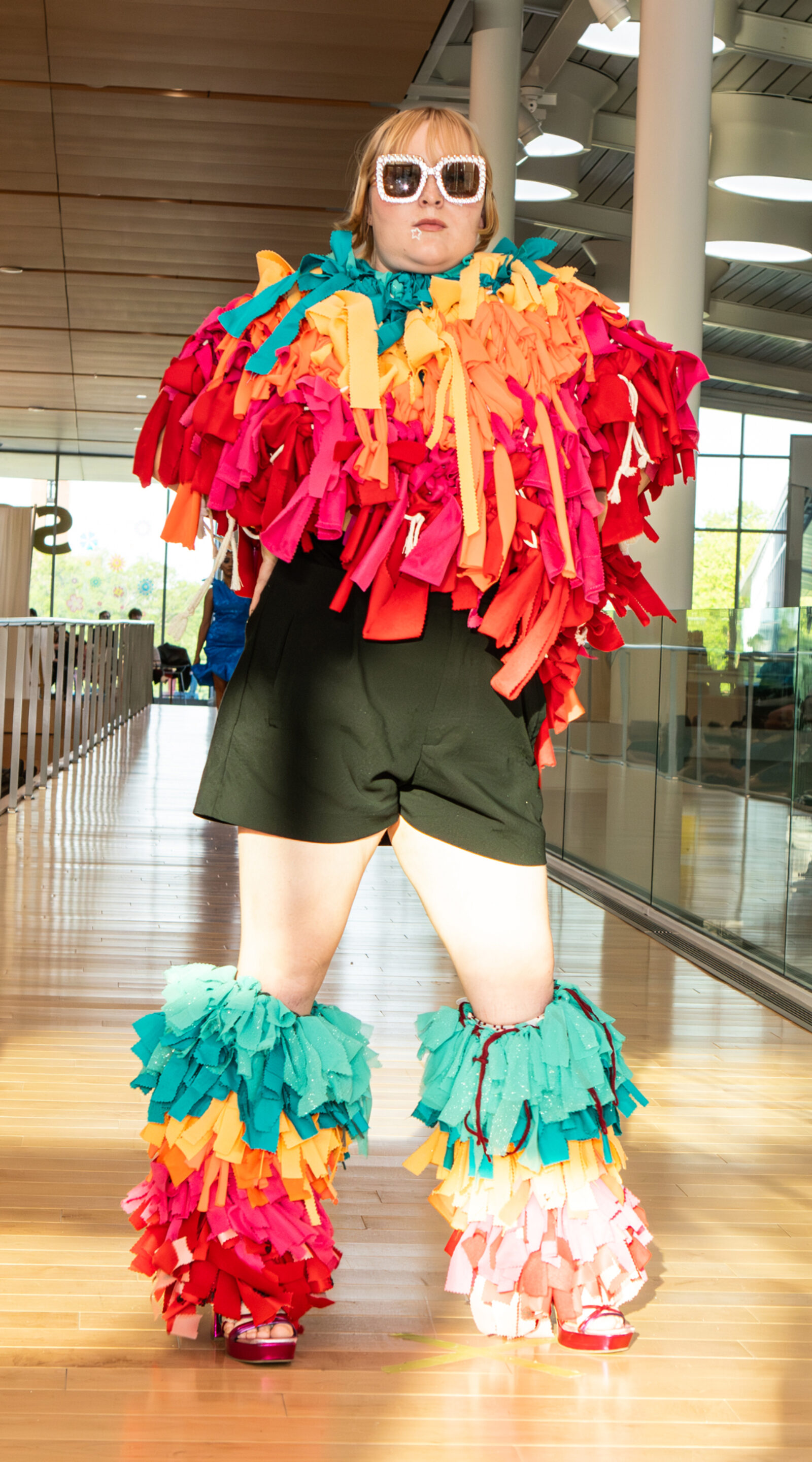
Woven Emotions: Healing designed by Elle Rife. Model: Raine. Re-Fashioned 2026. Photo by Natalie Fiol.
Woven Emotions: Healing designed by Elle Rife. Model: Raine. Re-Fashioned 2026. Photo by Natalie Fiol.
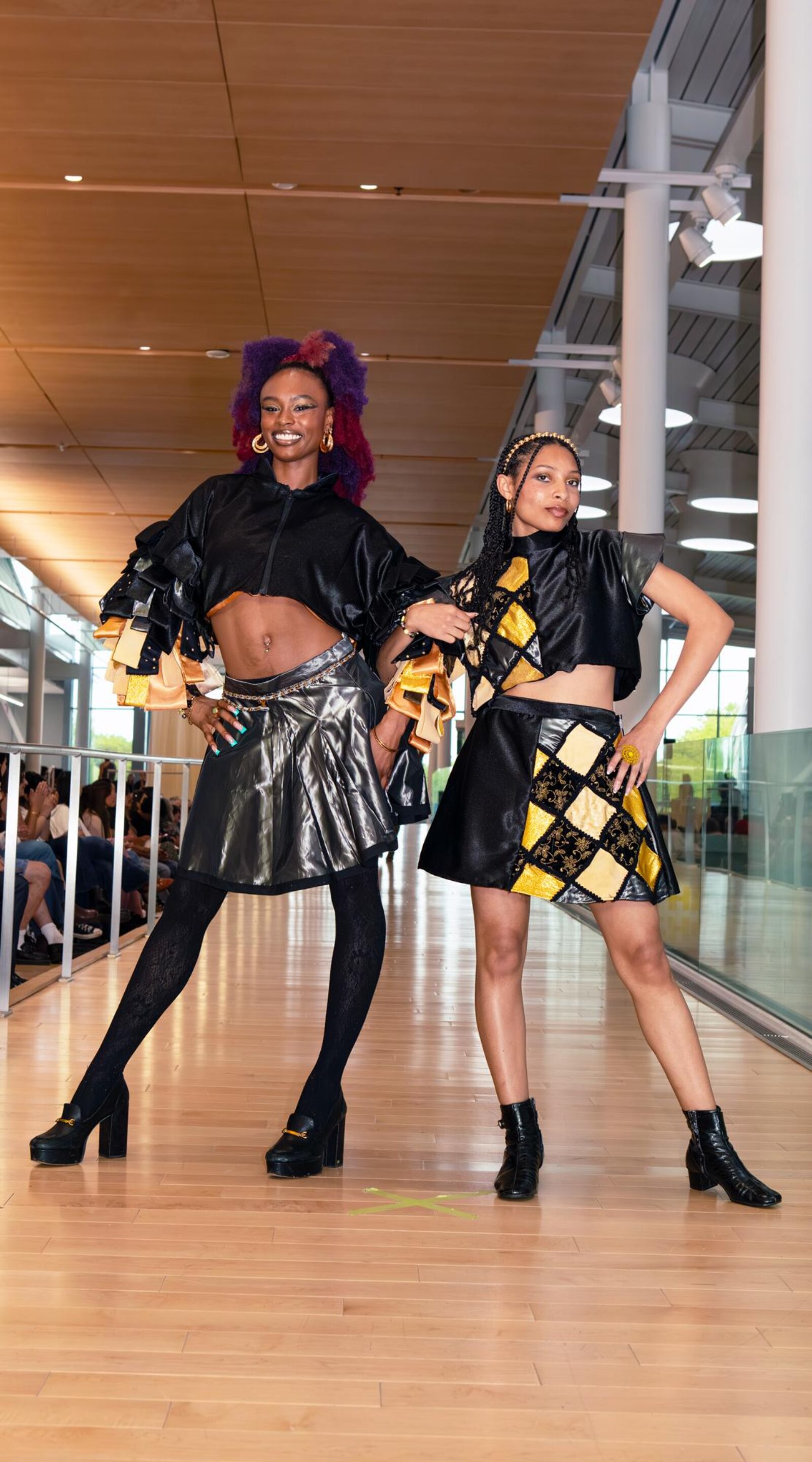
Future Fiction: Medieval Punk Party designed by Elle Rife. Models: Aja Hunter and Xyla Featherson. Re-Fashioned 2026. Photo by Natalie Fiol.
Future Fiction: Medieval Punk Party designed by Elle Rife. Models: Aja Hunter and Xyla Featherson. Re-Fashioned 2026. Photo by Natalie Fiol.
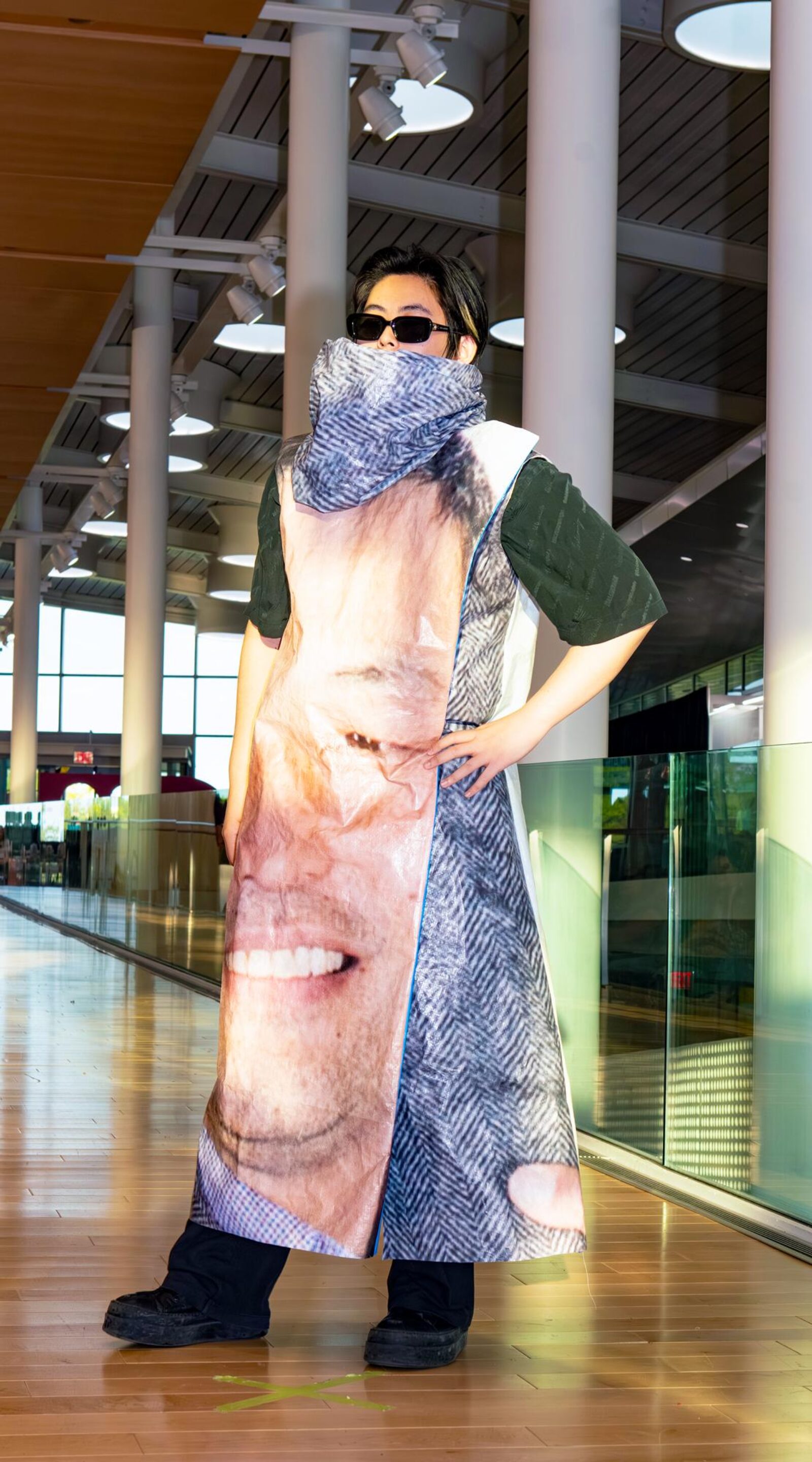
Gender/Silhouette designed by Leo Zhang. Re-Fashioned 2026. Photo by Natalie Fiol.
Gender/Silhouette designed by Leo Zhang. Re-Fashioned 2026. Photo by Natalie Fiol.
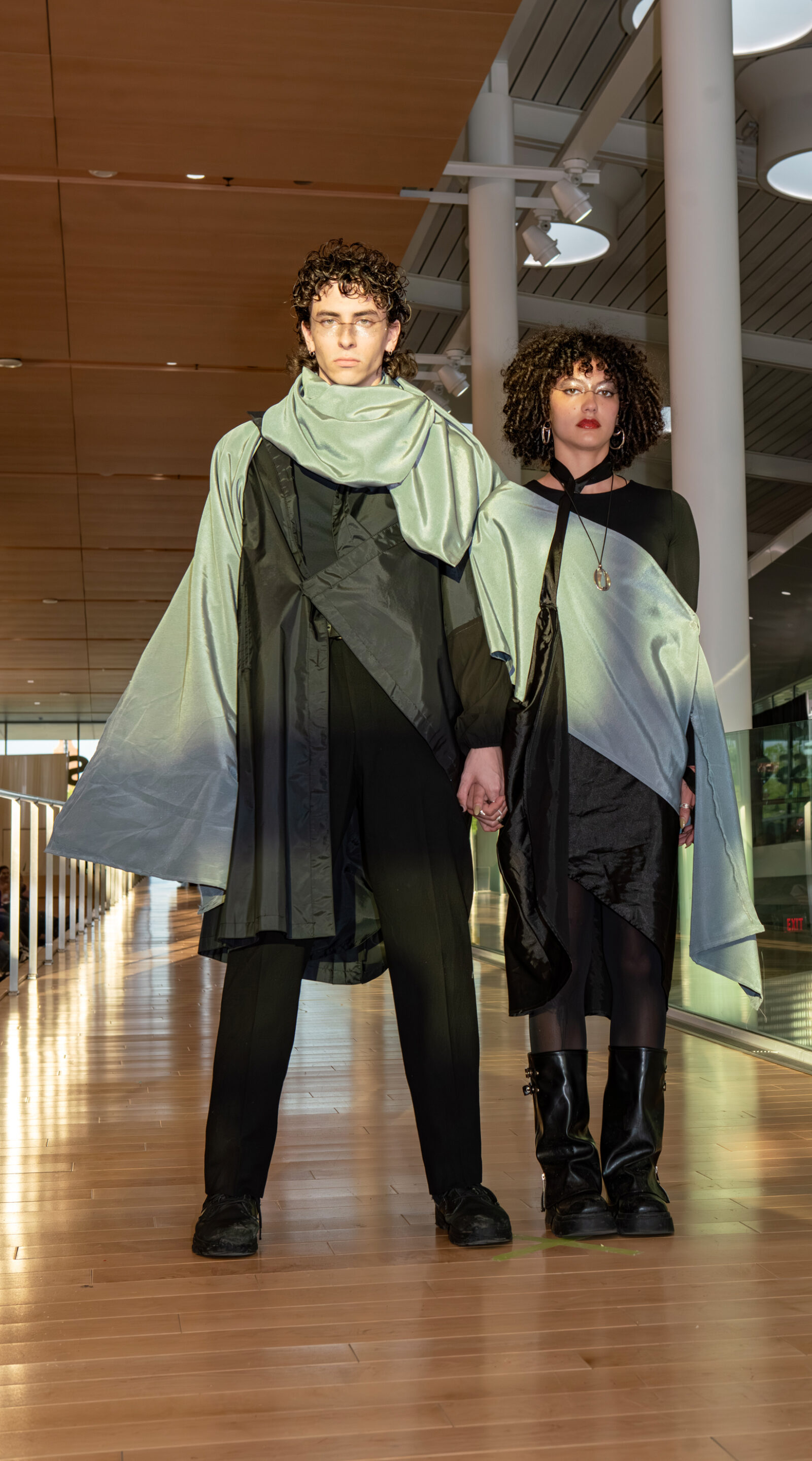
Future Fiction: Dystopia, climate collapse, chic survivalist designed by Stella Youse. Models: Nate Campion and Ariana Le Faivre. Re-Fashioned 2026. Photo by Natalie Fiol.
Future Fiction: Dystopia, climate collapse, chic survivalist designed by Stella Youse. Models: Nate Campion and Ariana Le Faivre. Re-Fashioned 2026. Photo by Natalie Fiol.
Re-Fashioned
dramatic treatment
Over more than two decades of teaching, Becker has also watched her own role evolve.
In my 20 years of teaching, I have seen a shift from a professor being this fount of knowledge … to students having access to more information than they could process in several lifetimes at their fingertips,” she said. “So, what does my job become? What does the embodiment of learning look like? How does being physically present in the classroom together change our relationship to learning? How can we acknowledge the specificity of our worldviews, the experiences we bring with us, and our uniqueness as humans in that process? I see one of my jobs as being able to ask the questions that they wouldn’t yet know to ask themselves.
More Than Fashion Cont.
That philosophy may be the clearest expression of what makes the Fashion concentration distinctive. Students leave with technical skills, but they also leave knowing how to think critically, collaborate across disciplines, embrace uncertainty, and ask better questions.
Those are qualities Becker believes will prepare them not just for today’s fashion industry, but for careers that have yet to be imagined.
Looking ahead, the Fashion concentration will undoubtedly continue to grow. But Becker isn’t interested in measuring its success solely by enrollment or industry recognition. Instead, she hopes students continue to shape its future, just as they helped bring it into existence.
“This program exists because students made it clear that this was something they wanted,” Becker shared. “I think it’s important that they understand that they still have a voice in it. They’re not just participating in the program—they’re helping shape its future.”